
Rail Corrosion Protection
— Sandblasting + Three-Layer Coating Integrated Solution
Make rails more durable and operations safer
Rails are the structural and operational backbone of railway and industrial track systems. In coastal, humid or heavily polluted environments, unprotected rails can corrode at rates of 0.1–0.3 mm per year, increasing maintenance costs and creating safety risks. Our customized protection service combines sandblasting pretreatment with a three-layer coating system to deliver targeted refurbishment for welds, joints, and complex structures as well as bulk protective processing — maximizing service life and minimizing long-term maintenance.

Core benefits /project outcomes
Extended service life: Treated rails can achieve a service life of 10–15 years depending on environment and maintenance.
Lower total cost of ownership: Systematic protection reduces frequent replacements and long-term operating & maintenance expense.
No compromise to rail performance: We leave the running surface uncoated and follow standardized weld-area procedures to preserve wheel-rail contact and braking behavior.
Flexible delivery: factory processing to suit projects of different scales.
Typical applications
Port and terminal rails (high salt spray)
Shipyard and heavy industry rails (many welds, oily contamination)
Industrial-park rails (chemical exposure, heavy dust)
Old-rail refurbishment and maintenance projects
Process overview
Site survey & tailored plan — Assess profile, environment and corrosion level; select sandblast and coating materials.
Sandblasting pretreatment — Remove rust, old paint and contaminants to achieve target surface roughness (Ra 25–50 μm).
Three-layer coating application — Zinc-rich epoxy primer → Mica iron oxide midcoat → Polyurethane or fluorocarbon topcoat.
Quality testing & handover — Full inspection of surface roughness, coating thickness, adhesion and porosity with a written report.
Standardized workflow
Our engineers conduct on-site surveys or review photos/samples to evaluate:
Rail type and cross-section
Service environment (coastal / high temperature / chemical exposure / dust)
Corrosion severity (light / medium / heavy)
Density of welds and joints
Desired service life and budget constraints
Deliverables: sandblast parameters, abrasive recommendation, coating selection and target layer thicknesses, inspection and acceptance criteria.

Sandblasting pretreatment (the foundation)
Sandblasting is key to ensuring coating adhesion. We follow strict standardized procedures:
Surface cleaning: Remove dust, oil and loose rust with compressed air and degreasers.
Abrasive selection:
Light corrosion: silica sand (cost-effective)
Medium/heavy corrosion or old coatings: steel shot/steel grit (high stripping power)
Environmentally sensitive areas: copper slag (low dust)
Parameter control: blast pressure 0.4–0.8 MPa; nozzle angle 45°–75°; nozzle-to-work distance 100–300 mm; target roughness Ra 25–50 μm.
Post-blast cleaning: Immediately blow off residual abrasive with compressed air to avoid secondary contamination.
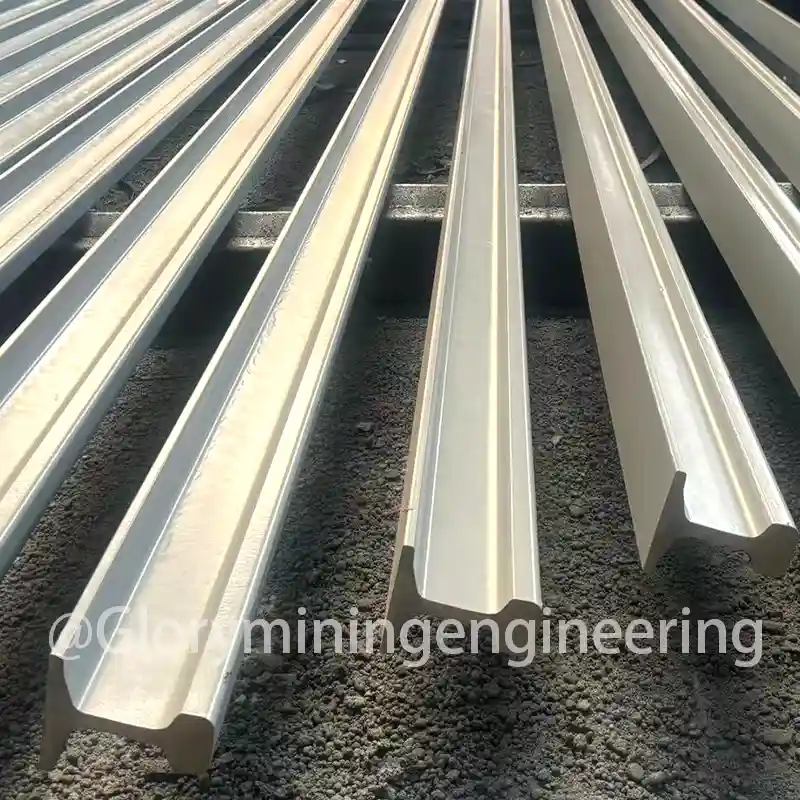
3. Three-layer coating system (layered protection)
Each layer serves a distinct function to form a comprehensive corrosion barrier:
Primer (anti-corrosion core)
Material: zinc-rich epoxy resin (zinc content ≥ 80% by weight)
Application: high-pressure airless spray
Dry film thickness (DFT): 60–80 μm
Function: sacrificial protection, pore filling, and chemical bonding to the steel substrate
Curing: at 25°C, minimum cure time ≥ 4 hours (varies by product and conditions)
Intermediate coat (structural reinforcement)
Material: mica iron oxide epoxy
Application: brush or roller
DFT: 80–100 μm
Function: mica platelets create a tortuous path to slow down ingress of water/oxygen and enhance mechanical strength
Topcoat (weather and chemical resistance)
Material: polyurethane or fluorocarbon topcoat (fluorocarbon recommended for coastal/heavy-pollution sites)
Application: spray
DFT: 60–80 μm
Conditions: relative humidity ≤ 85%, temperature 5–35°C for application
Function: UV resistance, chemical resistance, and aesthetic finish (standard colors: gray / dark gray)
Target total coating thickness: typically ≥ 220 μm (single-point thickness should not be less than 80% of design value).

4. Critical exclusions & controls
Running surface (rail head): Coating the rail head reduces wheel-rail friction and can flake under wheel loads. We mask the running surface and leave a 30 mm uncoated zone on top of the rail head.
Weld areas: Remove coating within 200 mm of welds before welding; after welding, re-sandblast the zone and reapply coatings. Seal weld terminations with silicone rubber or suitable sealants to prevent stress concentration and coating failure.
High-temperature operations: Avoid coating over un-cured areas or before hot works to prevent outgassing and porosity defects.
5. Quality testing & final delivery
We perform a full set of inspections and deliver a written report:
Surface roughness: Ra 25–50 μm (profilometer)
Total coating thickness: ≥ 220 μm (magnetic thickness gauge, sampled to design)
Single-layer DFT: primer 60–80 μm; midcoat 80–100 μm; topcoat 60–80 μm
Adhesion: cross-cut test per ISO 2409, no significant delamination
Holiday/porosity test: 3000 V spark test, no holidays
Appearance: check for color, runs, blisters, etc.
Handover includes a full inspection report noting test data, dates, and contract references. We also provide maintenance recommendations and repair commitments as agreed.
Capability & quality assurance
Technical team: experienced applicators and engineers trained in specialized procedures.
Standards compliance: AREMA, TB/T 1527-2011, ISO 8501, ISO 12944 referenced as execution and acceptance guides.
Environmental & safety compliance: site controls for waste abrasive handling and occupational safety in accordance with local regulations.
Delivery assurance: define schedule by project size; support factory processing and on-site application; provide warranty and after-sales maintenance guidance.
FAQs
Q:Can this system fully replace hot-dip galvanizing?
A:Both approaches have pros and cons. Hot-dip galvanizing provides whole-part metallurgical protection but is less flexible for welds and local repairs. Our sandblast + three-layer coating system offers advantages in local repairability, weld-area refinement and cost control; it is often preferable for refurbishment and targeted protection scenarios.
Q: Will the coating withstand heavy traffic loads?
A: Yes — we keep a 30 mm uncoated running surface to preserve wheel-rail contact. The coating system itself provides good mechanical strength and wear resistance, but actual wear depends on traffic type, wheel material and operating conditions.
Q: What warranty do you provide?
A: Warranty terms depend on project scale and selected materials. We provide written warranties for materials and workmanship; typical contractual terms include repair of defects due to materials or application within the agreed warranty period.