
Rail Handling Clamp
Overview
We offer not only standard rail handling clamps but also specialize in custom-engineered solutions for mining and heavy industrial applications. Our designs are tailored to fit non-standard rail profiles—such as QU120 crane rails and special section rails—alongside extreme environmental conditions and bespoke equipment interfaces. Every product is backed by recognized industry standards and lab-verified materials, ensuring reliability in harsh operational settings. This dual focus on standard and custom options reduces operational risk, minimizes rail handling time, and simplifies seamless integration with your existing equipment.
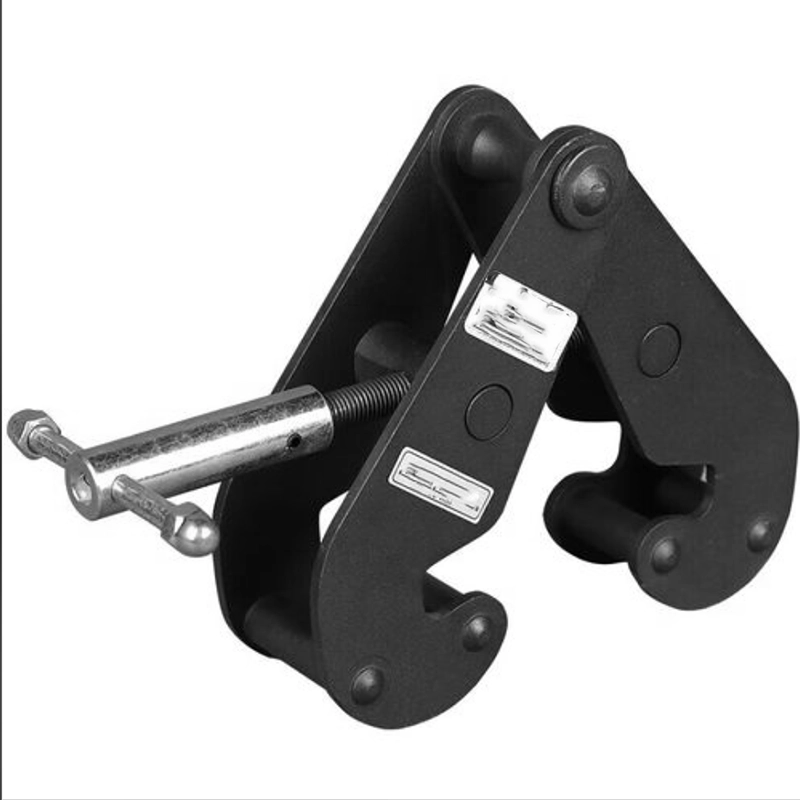


Core Customization Dimensions
Structure (Jaw / Arms / Lifting Method)
- Jaw: Adjustable curvature (R5–R25mm) and opening range of 10–120mm (or customized according to rail cross-section); single-jaw or dual-jaw linkage is supported, and a structure for synchronous handling of double rails is optional.
- Arms: Standard length ranges from 350mm to 500mm, which can be shortened to 200mm (for narrow spaces) or extended to 800mm (for high-position operations); made of high-strength alloy steel, with rated load range matched to customer requirements (1–10 tons or higher for customization).
- Lifting Method: Horizontal lifting (with double-suspension-point balance), vertical lifting (can be equipped with 360° flipping mechanism), and inclined lifting (with angle locking at 0–60°).
Compatibility (Equipment Interface)
- Hydraulic/Pneumatic: Explosion-proof hydraulic quick connectors are supported (customized according to the user’s crane caliber) and can refer to industrial quick connector specifications.
- Mechanical: Positioning pins, quick buckles, limit pins, etc., can be customized based on equipment interface drawings (supporting ±0.5mm alignment accuracy).
Testing, Standards & Compliance
- Design Reference Standards: The design and testing of manual lifting clamps refer to JB/T 7333 (Basic Requirements for Manual Lifting Clamps for Rails, I-beams, etc.), ensuring the basic structure and testing process of the clamps are verifiable.
- Hydraulic Safety: The design and safety requirements of the hydraulic system comply with GB/T 3766 (General Rules and Safety Requirements for Hydraulic Fluid Power).
- Material Certificates (MTC) & Mechanical Testing: Material certificates, hardness test reports, and necessary low-temperature impact test reports (with itemized records during the sample verification phase) are provided for all key components (quenched jaws, alloy weld overlay layers, structural parts).
Materials
(Selected by Working Condition & Verified via Mechanical/Corrosion Testing)
| Working Condition / Scenario | Recommended Material Solution | Verifiable Performance |
|---|---|---|
| High Humidity / High Corrosion | 304 Stainless Steel Clamp Body + Corrosion-Resistant Alloy (e.g., Hastelloy) Jaws | Salt Spray Corrosion Resistance ≥ 1000 Hours (per test method specified in the contract) |
| Extreme Cold (≈−30℃) | Q355ND Low-Temperature Steel Structural Components + Low-Temperature Tempered 42CrMo Jaws | Q355ND is a commonly used low-temperature structural steel (with excellent low-temperature toughness); 42CrMo, after tempering, provides high strength and impact toughness. |
| Heavy-Duty Wear | Wear-Resistant Alloy Overlay Welding Jaws (e.g., NM450 Series) | Typical Surface Hardness: HBW ≈ 360–450 (a common indicator for wear-resistant plates). We use Brinell hardness values as the acceptance criterion. |
Why Customize?
Ready to get a free Feasibility Assessment?
Send us: rail profile (drawing/photo), single-piece length & weight, operating environment (temperature/humidity/corrosion), and the equipment interface specs. We’ll return a written feasibility report with recommended clamp geometry, material plan and key risks — a practical decision pack for procurement.